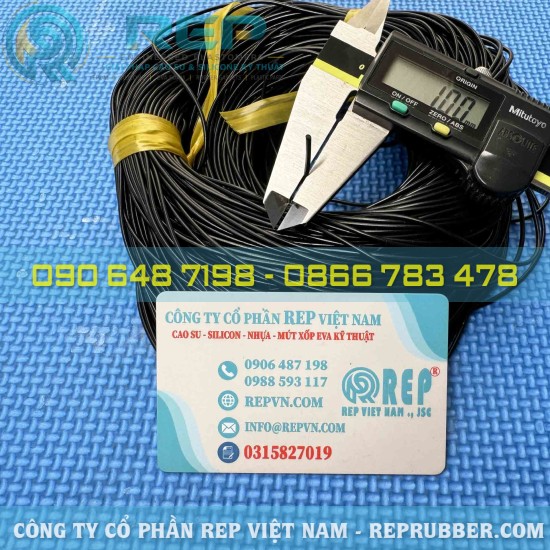
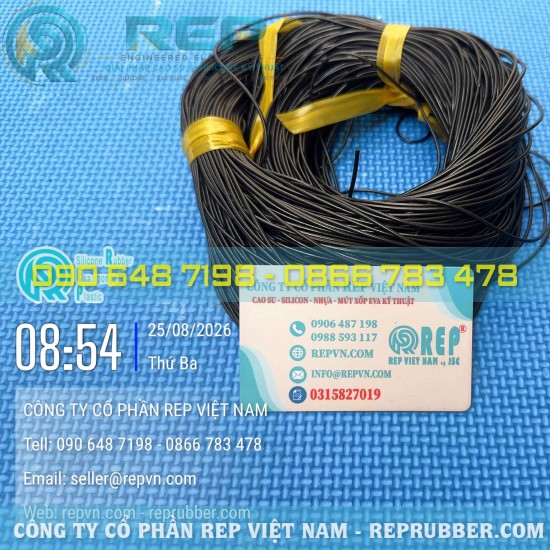
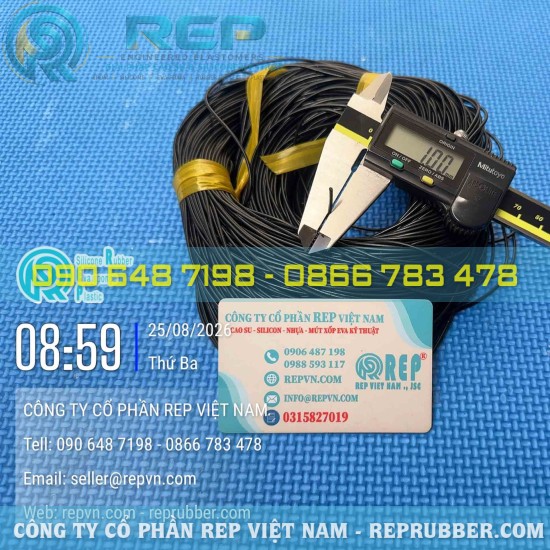
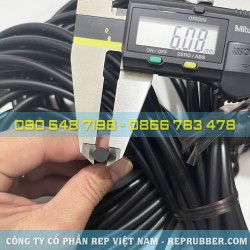
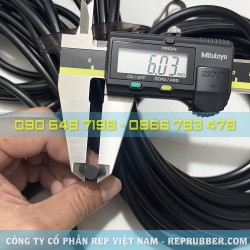
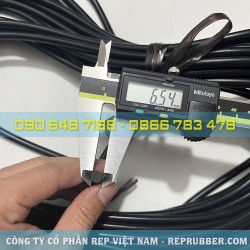
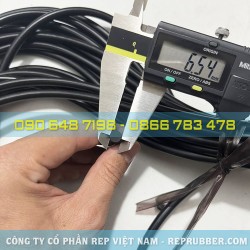
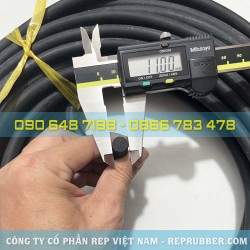
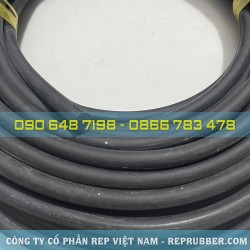
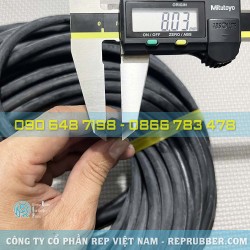
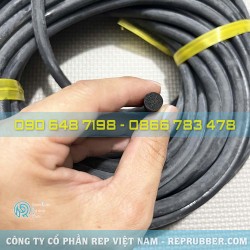
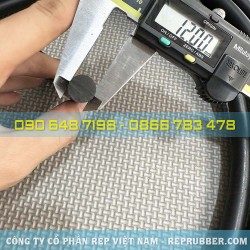
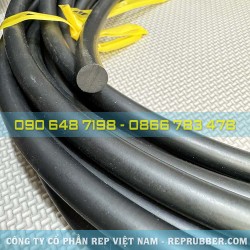
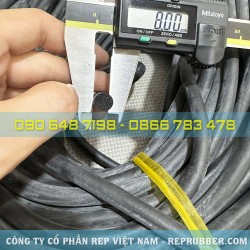
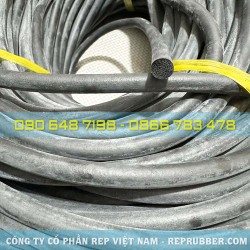
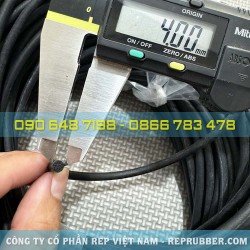
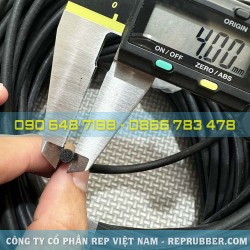
EPDM Rubber Seal D1 is a small round-profile rubber sealing component with a nominal diameter of 1 mm. It can be considered for applications requiring a compact rubber element for gap filling, cushioning, positioning, or sealing support between mating surfaces.
For very small rubber profiles such as D1, the actual cross-section, installation condition, required length, and contact surfaces should be carefully checked before mass production. The “D1” designation should therefore be confirmed against the technical drawing, physical sample, or application requirements.
REP Vietnam provides consultation and custom EPDM rubber profile manufacturing based on samples, technical drawings, dimensions, required lengths, quantities, and actual application conditions
An EPDM Rubber Seal D1 is a small round-profile rubber component with a nominal diameter of approximately 1mm.
It may be considered for applications requiring a compact rubber element for gap filling, cushioning, positioning or sealing support between mating surfaces.
For such a small profile, however, the D1 designation alone does not provide enough information to confirm the correct product for an application.
The actual installation gap, cross-section, required length, compression condition and operating environment should also be considered.
For custom production, REP Vietnam recommends providing a physical sample or technical drawing whenever possible.
Key Considerations for a D1 EPDM Rubber Profile
EPDM is widely used for rubber profiles and sealing applications. Depending on the formulation and actual application, it can be considered where elasticity and suitable environmental resistance are required.
For a D1 profile, geometry is just as important as material.
Before ordering, customers should confirm:
Cross-section.
Installation gap.
Compression condition.
Required length.
Installation method.
Contact surfaces.
Operating environment.
Required quantity.
Customers looking for other EPDM sealing solutions can also review REP's EPDM rubber seal range for additional profile options.
Applications of EPDM Rubber Seal D1
Small Gap Filling
A small round rubber profile may be used to fill a narrow gap between mating surfaces when the profile dimensions are compatible with the assembly.
The actual gap should always be measured or confirmed from the technical drawing before selecting the rubber profile.
Cushioning
The elastic rubber profile may provide a small cushioning layer between components where direct contact needs to be reduced.
Sealing Support
In an appropriately designed assembly, a small rubber profile may help limit the passage of environmental elements such as dust or water.
Actual sealing performance depends on the complete mechanical design, compression, surface condition and installation method.
Why Should the D1 Dimension Be Confirmed?
For a rubber profile measuring around 1mm, even a small dimensional difference can affect installation.
Two products may both be described as “D1” but still have different requirements regarding:
Length.
Compression.
Installation gap.
Retention method.
Contact surface.
Tolerance.
Intended application.
Therefore, a physical sample or technical drawing is highly recommended when accurate reproduction is required.
The D1 designation should not be used to assume other dimensions such as width, height or thickness without a drawing or verified sample.
Round EPDM Seal vs. Other Rubber Profiles
A round profile is only one possible rubber-seal geometry.
Depending on the assembly, customers may require U-profiles, D-profiles, T-profiles, H-profiles, rectangular profiles or completely customized cross-sections.
For example, when a seal needs to grip the edge of a metal panel, a U-profile may be more appropriate than a round rubber cord. REP provides different EPDM profile solutions, including the EPDM U-profile rubber seal 7x17x2, for customers evaluating alternative profile designs.
The correct profile should always be selected according to the actual installation structure.
EPDM or Silicone Rubber?
EPDM and silicone are both widely used in rubber sealing applications, but they are not interchangeable in every environment.
Material selection should consider:
Operating environment.
Temperature conditions.
Contact with fluids or chemicals.
Elasticity requirements.
Installation structure.
Application-specific requirements.
If the application specifically calls for silicone, customers can also review REP's silicone rubber seal products before making a material decision.
The material should be selected according to the actual application rather than based only on product name or price.
Custom EPDM Rubber Seal D1 Manufacturing
Standard products do not always meet industrial requirements.
Custom manufacturing may be appropriate when:
The original seal has no identifiable part number.
A replacement profile is no longer commercially available.
The cross-section is application-specific.
Different cut lengths are required.
OEM production is required.
Large quantities are needed.
Customers can provide REP with:
Physical sample.
Technical drawing.
Cross-section dimensions.
Required length.
Quantity.
Installation photos.
Operating conditions.
Special requirements.
For very small profiles such as D1, providing a sample or detailed drawing is particularly useful.
Information Required for Quotation
To receive a more accurate quotation, customers should provide as much information as possible:
Product: EPDM Rubber Seal D1
Cross-section: Diameter or profile dimensions based on drawing/sample.
Length: Meter, coil, pre-cut pieces, or custom length.
Quantity: Required meters or pieces.
Material: EPDM, if already specified.
Application: Installation location and intended function.
Environment: Indoor, outdoor, moisture, heat, chemicals, or other conditions.
Reference: Existing sample, drawing, or installation photo.
This information allows the manufacturer to understand the actual requirement rather than relying only on a product name.
Can D1 EPDM Be Replaced by Another Rubber Seal?
A replacement should not be selected based on diameter alone.
Another rubber material with a similar diameter may behave differently during installation. Likewise, an EPDM profile with a different cross-section may not be a suitable direct replacement.
For replacement applications, customers should provide the existing seal, drawing and information about the equipment.
If a different rubber material is required, REP can also evaluate other options such as NBR rubber seals according to the actual operating conditions.
REP Vietnam – Custom Rubber Seal Manufacturing
REP Vietnam provides rubber sealing products and custom rubber profiles for industrial customers.
The company can work from:
Samples.
Technical drawings.
Existing dimensions.
Installation requirements.
Required lengths.
Production quantities.
For customers looking for a specific EPDM Rubber Seal D1, sending a sample or drawing is the most effective way to confirm the required profile before production.
The EPDM Rubber Seal D1 is a very small round rubber profile that may be suitable for gap filling, cushioning or sealing-support applications depending on the actual design.
Because the profile is extremely small, the D1 designation should be verified against the physical sample or technical drawing. Installation gap, compression, required length and operating environment should also be reviewed before production.
REP Vietnam provides consultation and custom rubber profile manufacturing based on samples, drawings and application requirements.