

In industrial oven and drying systems, sealing gaskets are not merely auxiliary components but critical elements that directly impact thermal efficiency, equipment durability, and product quality. In practice, selecting an inappropriate gasket type can lead to energy loss, hinge failure, and operational inefficiencies.
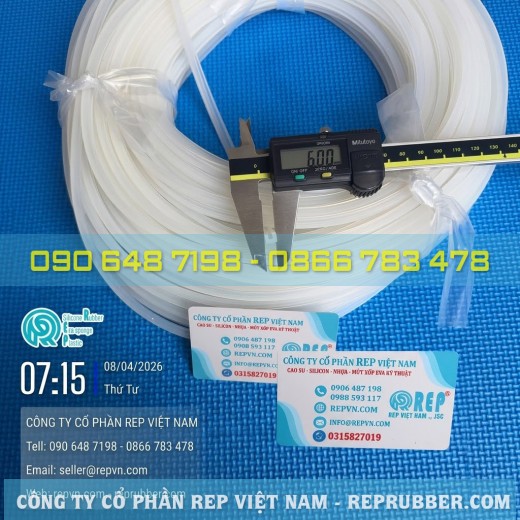
Two commonly used materials in this application are hollow rectangular silicone gaskets and solid silicone gaskets. However, their structural differences result in significantly different performance outcomes.
Structural Design and Technical Characteristics – The Core Difference
Solid silicone gaskets feature a homogeneous, fully dense structure with no internal cavity. This design provides high abrasion resistance and structural rigidity, making them suitable for applications requiring mechanical strength. However, their stiffness limits compressibility, especially in systems with surface tolerances or misalignment.
In contrast, hollow rectangular silicone gaskets are engineered with an internal cavity, forming an elastic “air chamber.” This structure allows the gasket to deform بسهولة under compression and rapidly recover after load release. This characteristic is the key factor behind their superior sealing performance in industrial ovens.
Why Hollow Structures Extend Hinge Lifespan
In industrial ovens, doors are typically large and frequently operated. When solid gaskets are used, higher compression force is required to achieve sealing, leading to:
- Increased mechanical stress on hinges
- Accelerated door sagging
- Misalignment over time
Hollow gaskets, on the other hand, function as an elastic buffer:
- Significantly reduce closing force
- Distribute pressure evenly across the sealing surface
- Minimize mechanical wear and structural deformation
As a result, hinge lifespan is significantly extended, while maintenance costs are reduced over the long term.
Optimized Compression and Thermal Sealing Performance
One of the most critical requirements in industrial ovens is airtight thermal sealing. Even minor leakage can result in substantial heat loss.
Hollow silicone gaskets offer:
- Excellent adaptability to surface irregularities
- Effective compensation for dimensional tolerances
- Stable sealing pressure over extended operation
Conversely, solid gaskets lack flexibility and cannot fully compensate for surface deviations, which may lead to micro gaps. This results in:
- Heat leakage
- Increased energy consumption
- Reduced process efficiency
Why Yellow Silicone Gaskets Are Preferred in Food Processing
In food-grade applications, gasket color is not merely aesthetic but serves functional and regulatory purposes.
Yellow silicone is widely preferred because:
- It enhances visibility of dirt, grease, and contaminants
- Facilitates visual inspection and maintenance
- Allows early detection of wear, cracks, or thermal degradation
- Prevents confusion with general-purpose industrial rubber
Additionally, yellow silicone gaskets are typically manufactured from virgin silicone compounds compliant with FDA and HACCP standards, ensuring safety in food processing environments.
Market Reality: Why Conventional Rubber Gaskets Fail
Many manufacturers still utilize conventional rubber materials such as EPDM or NBR in high-temperature ovens, leading to critical issues:
Thermal Deformation and Aging
Standard rubber materials are not designed for prolonged high-temperature exposure, resulting in:
- Hardening
- Cracking
- Loss of elasticity
Odor Contamination
At elevated temperatures, low-grade rubber may release odors, directly affecting food quality.
Heat Leakage and Energy Loss
Poor sealing performance leads to:
- Thermal leakage
- Increased energy consumption
- Reduced operational efficiency
The Solution from REP Vietnam – Yellow Hollow Rectangular Silicone Gaskets
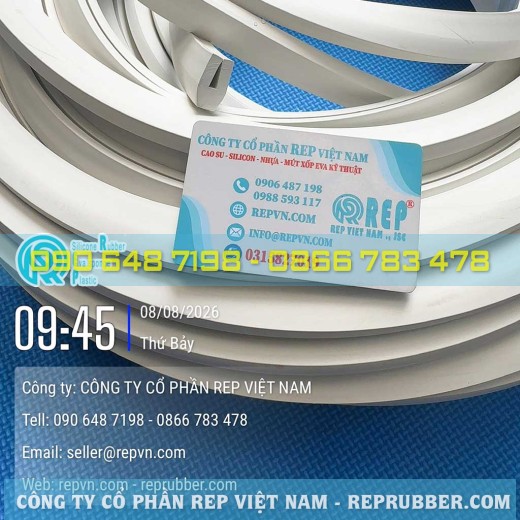
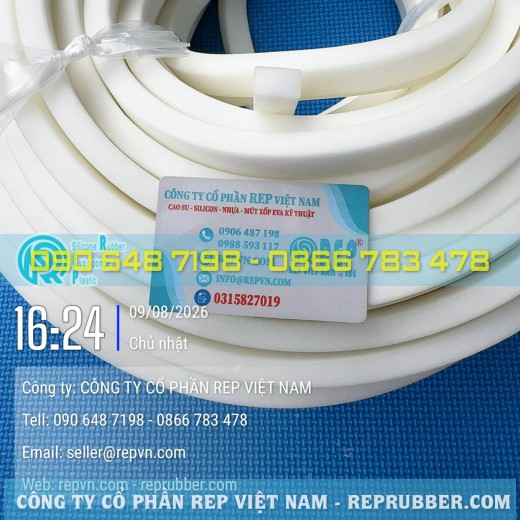
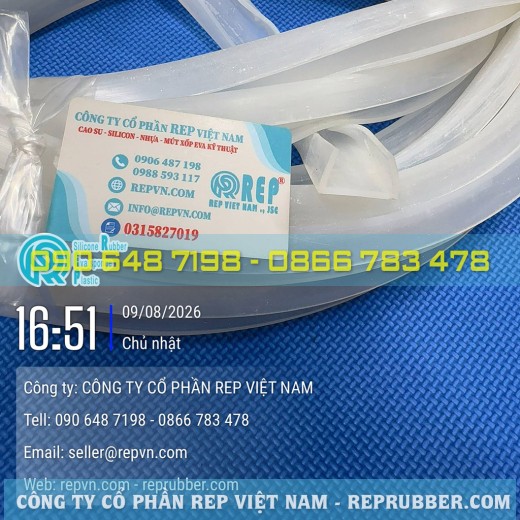
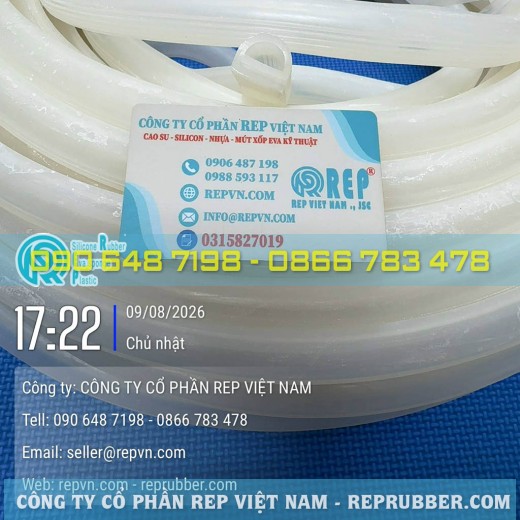
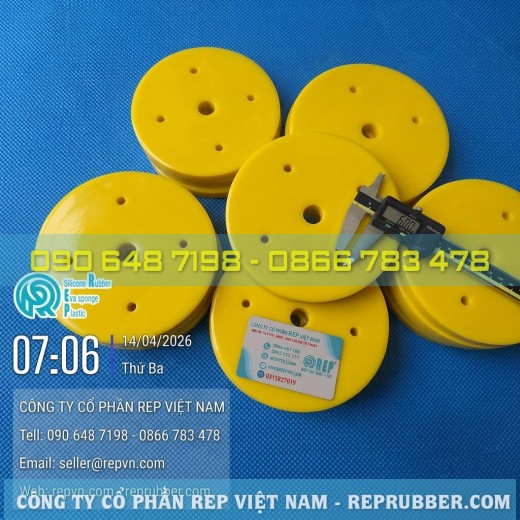
To meet the stringent requirements of modern industry, REP Vietnam Joint Stock Company has developed a specialized line of yellow hollow rectangular silicone gaskets for industrial ovens and drying systems.
Key advantages include:
- Operating temperature range: -60°C to 200°C
- Odorless and food-safe
- High elasticity and superior sealing performance
- Reduced door closing force, protecting hinges
- Service life 2–3 times longer than conventional rubber
Manufacturing Capabilities of REP Vietnam
With a production facility located in Ho Chi Minh City, REP Vietnam offers:
- Custom gasket manufacturing (OEM/ODM)
- Flexible design in:
- Cross-sectional dimensions
- Hardness (Shore A)
- Color specifications
- Tooling development based on drawings or physical samples
- Fast lead times with consistent quality control
This enables OEM partners and industrial equipment manufacturers to optimize both design and cost efficiency.
Selecting between hollow and solid silicone gaskets is not merely a material choice but a strategic decision affecting system performance, durability, and long-term operational cost.
In most industrial oven applications, hollow rectangular silicone gaskets provide a superior solution due to:
- Enhanced compressibility
- Improved thermal sealing
- Reduced mechanical stress on components
Combined with the manufacturing expertise of REP Vietnam, this solution ensures efficiency, safety, and long-term reliability.
Contact Information
REP VIETNAM JOINT STOCK COMPANY
Address: 386/17 Ha Huy Giap, An Phu Dong Ward, Ho Chi Minh City, Vietnam
Hotline: +84 906 487 198 – +84 866 783 478
Email: info@repvn.com – seller@repvn.com
Website: repvn.com – reprubber.com – gioangcaosusilicon.com
Bài viết liên quan
61 Comment(s)
Hello, I enjoy reading all of your post. I like to write a little comment to support you.
It's actually a nice and useful piece of info. I am glad that you simply shared this helpful information with us. Please stay us informed like this. Thank you for sharing.|
I am sure this article has touched all the internet users, its really really fastidious piece of writing on building up new blog.
I always was concerned in this topic and still am, thank you for putting up.
Everyone loves what you guys tend to be up too. This kind of clever work and coverage! Keep up the fantastic works guys I've included you guys to our blogroll.
I am sure this article has touched all the internet people, its really really pleasant post on building up new web site.
Nike free run dames sale supplies the ability that the women must slam dunk on anyone.
I’ll right away grab your rss feed as I can not find your e-mail subscription link or newsletter service. Do you have any? Please permit me recognise in order that I may subscribe. Thanks.
I wanted to thank you for this very good read!! I absolutely loved every little bit of it. I have got you saved as a favorite to look at new things you
I am sure this article has touched all the internet viewers, its really really good piece of writing on building up new web site.
I really like what you guys tend to be up too. This type of clever work and reporting! Keep up the good works guys I've incorporated you guys to our blogroll.
Ahaa, its nice conversation about this piece of writing here at this web site, I have read all that, so now me also commenting at this place.
I need to to thank you for this excellent read!! I absolutely enjoyed every bit of it. I've got you bookmarked to check out new things you
I like what you guys are usually up too. Such clever work and coverage! Keep up the very good works guys I've added you guys to my personal blogroll.
You made some good points there. I looked on the net for more info about the issue and found most individuals will go along with your views on this website.
Pretty! This was a very wonderful post. A lot of many thanks for providing this specific tips.
I love it when folks get together and share ideas. Great site, continue the good work!
Wow, this paragraph is good, my sister is analyzing these kinds of things, so I am going to inform her.
Your method of describing the whole thing in this post is really good, all be capable of effortlessly know it, Thanks a lot.
I really like what you guys tend to be up too. This type of clever work and exposure! Keep up the superb works guys I've included you guys to my own blogroll.
Hello! Someone in my Myspace group shared this website with us so I came to look it over. I'm definitely loving the information. I'm book-marking and will be tweeting this to my followers! Wonderful blog and great design.
I’m nevertheless waiting around for a wawa listed here inside Yuma AZ. I grew up within PHL
I really like what you guys are up too. This type of clever work and exposure! Keep up the amazing works guys I've added you guys to my personal blogroll.
It's very trouble-free to find out any topic on web as compared to books, as I found this post at this web site.
This is very attention-grabbing, You're a very professional blogger. I have joined your rss feed and sit up for in the hunt for more of your excellent post. Additionally, I've shared your site in my social networks
I consider something truly special in this web site.
I am sure this paragraph has touched all the internet viewers, its really really fastidious paragraph on building up new web site.
You'll need to manually enable Flash if you wish to use it.
Perfectly written subject material, thank you for information.
I am sure this post has touched all the internet visitors, its really really pleasant post on building up new website.
I visited several sites except the audio feature for audio songs present at this website is truly fabulous.
Everyone loves what you guys are up too. Such clever work and coverage! Keep up the good works guys I've included you guys to my own blogroll.
Wow, this paragraph is good, my younger sister is analyzing these kinds of things, thus I am going to inform her.
you're truly a good webmaster. The website loading velocity is amazing. It seems that you are doing any distinctive trick. Also, The contents are masterpiece. you've performed a wonderful task in this matter!
Wow! This blog looks exactly like my old one! It's on a completely different subject but it has pretty much the same layout and design. Excellent choice of colors!
You've made some really good points there. I looked on the internet for additional information about the issue and found most individuals will go along with your views on this site.
Ahaa, its good discussion on the topic of this piece of writing at this place at this webpage, I have read all that, so now me also commenting here.
I like your writing style really enjoying this site.
I aam sre this artocle hass touched all thhe nternet visitors, itss rsally realkly fastkdious rticle on building up neww weeb site.
I will right away snatch your rss feed as I can’t to find your email subscription link or e-newsletter service. Do you have any? Kindly permit me realize so that I may subscribe. Thanks.
Way cool! Some extremely valid points! I appreciate you penning this write-up and also the rest of the site is also very good.
My brother recommended I might like this website. He used to be entirely right. This submit actually made my day. You can not believe simply how so much time I had spent for this information! Thanks!
These are really wonderful ideas in concerning blogging. You have touched some good points here. Any way keep up wrinting.
These are in fact fantastic ideas in on the topic of blogging. You have touched some pleasant factors here. Any way keep up wrinting.
Ahaa, its fastidious discussion on the topic of this piece of writing here at this webpage, I have read all that, so now me also commenting at this place.
Heya i’m for the primary time here. I came across this board and I in finding It really useful & it helped me out a lot. I am hoping to give one thing again and help others such as you helped me.
I think the admin of this web site is genuinely working hard for his web page, because here every stuff is quality based stuff.
I just couldn't depart your web site prior to suggesting that I actually loved the usual information a person supply in your guests? Is going to be back incessantly in order to check out new posts
Hack works on all Windows and Mac OS, you add assets utilizing a USB cable, see the video under.
I am sure this article has touched all the internet visitors, its really really good post on building up new webpage.
I am sure this article has touched all the internet visitors, its really really pleasant post on building up new webpage.
I will right away take hold of your rss as I can not to find your e-mail subscription hyperlink or e-newsletter service. Do you have any? Please permit me recognise so that I may just subscribe. Thanks.
It's very trouble-free to find out any matter on web as compared to books, as I found this post at this web page.
I am sure this post has touched all the internet viewers, its really really pleasant article on building up new blog.
Wow, this post is pleasant, my younger sister is analyzing such things, so I am going to inform her.
Wow, this piece of writing is pleasant, my younger sister is analyzing these things, therefore I am going to let know her.
While you covertly wish to get your sweetheart back, it's best to hold back for a while.
I am sure this piece of writing has touched all the internet viewers, its really really nice paragraph on building up new weblog.
You've made some good points there. I looked on the internet for additional information about the issue and found most people will go along with your views on this website.
I just could not go away your site prior to suggesting that I really loved the usual info a person provide on your visitors? Is going to be back steadily in order to check up on new posts
I’ll immediately snatch your rss as I can’t find your email subscription link or newsletter service. Do you’ve any? Please let me recognize in order that I may subscribe. Thanks.
Leave a Comment